
Fire Alarm Testing for Businesses: Who Does What, and When


A business fire alarm should be tested every week by operating a manual call point, using a different call point each time, and the result written in the fire alarm log book. The control panel should be checked at least every 24 hours for faults, and a competent person should inspect and service the whole system every six months. That is the pattern set out in government fire safety guidance for workplaces, and it is what a fire officer will expect to see.
Homes are simpler: press the test button on each smoke alarm at least once a month.
Who is responsible for fire alarm testing?
The "responsible person" is. Under fire safety law in England, that is the employer, owner, landlord, occupier or anyone else with control of the premises, such as a facilities manager or managing agent. They must carry out a fire risk assessment, put appropriate fire safety measures in place and maintain them.
In practice the responsible person usually names someone on site to run the routine tests. Government guidance says the system should be supervised by a named person given enough authority and training to manage the routine testing. In a small shop that might be the owner; in an office it is often the facilities or office manager.
The six-monthly service is different. The guidance says it should be done by a competent person with specialist knowledge of fire warning and automatic detection systems, normally under a service contract with a fire alarm company.
How often should fire alarms be tested?
The government's fire safety risk assessment guide for offices and shops sets out a schedule. In summary:
Every day (every 24 hours): look at the control panel and confirm the system is active with no faults showing.
Every week: test the fire detection and warning system following the installer's instructions, by operating a manual call point.
Every six months: a competent person tests and maintains the fire detection and warning system.
Every year: the fire alarm, emergency lighting and other installed fire systems are tested and maintained by a competent person.
The same guide adds monthly checks on emergency lighting and fire doors, and says a log book of all maintenance and testing is of benefit.
How to do the weekly fire alarm test
The weekly fire alarm test checks that a signal from a call point reaches the panel and that the panel sounds the alarms. It takes a few minutes.
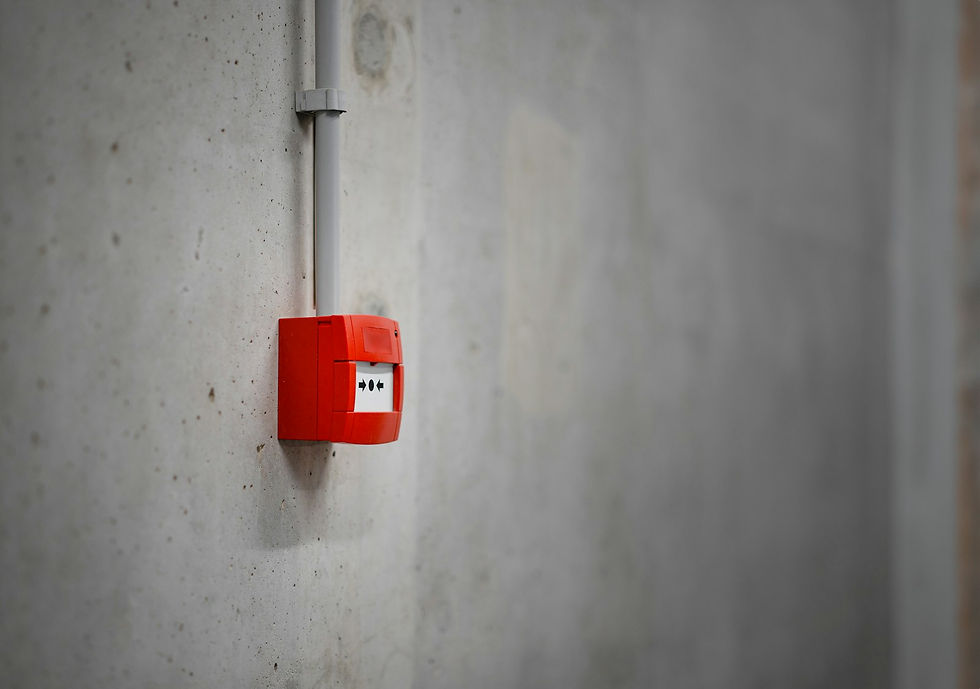
Warn people first. Tell staff and anyone in the building that a test is about to happen, and if the system is connected to a monitoring centre, let them know beforehand so the test does not cause a false alarm call.
Pick the next call point on the rota. Guidance says to use a different call point for each successive test. Numbering the call points and working through them in order makes this easy to track.
Operate it with the test key. Most call points take a small key that triggers them without breaking the glass or element.
Confirm the sounders operate throughout the building, and that the panel shows the right zone.
Reset the call point and the panel following the installer's instructions.
Write it in the log book: the date, time, call point number, who did it and whether everything worked.
Test at the same time each week so staff recognise it as a test, and keep it short so nobody mistakes it for a real alarm. The guidance adds that extra tests may be needed so people who work outside normal hours also get to hear the alarm.
If a sounder does not operate, the panel shows a fault, or a zone does not report correctly, record it and get it fixed promptly. Our fire alarm systems service includes both repairs and planned maintenance.
What goes in a fire alarm log book?
A fire alarm log book is the written record that the system is being looked after. Government guidance says a log book (or electronic record) of all testing and maintenance is of real benefit, and during an inspection it is often the first thing asked for.
A useful log book records:
The weekly call point tests, with the call point number each week.
Every fire alarm activation, real or false, and its cause.
Faults and what was done about them.
Service visits and the engineer's report.
Any changes to the system, such as new detectors after a refit.
Staff fire drills.
Keep it near the panel so whoever does the test can find it.
What happens at a six-monthly service?
A service is a proper inspection by a competent person. It typically includes checking the panel and the log book, functionally testing detectors and call points, checking the standby batteries, confirming sounders can be heard, and looking for changes to the building (new partitions, a change of use) that might mean the system no longer covers the right areas.
Batteries matter. The same guidance says an electrical fire warning system should have a back-up supply that can normally run it for at least 24 hours and then sound the alarm in all areas for 30 minutes. Batteries age, so they are tested at each visit.
Fire alarm testing in homes and rented houses
Domestic smoke alarms need less. The government's Fire Kills campaign advises testing them at least monthly by pressing the test button.
Landlords in England must check each alarm is working on the first day of a new tenancy and repair or replace alarms once told they are faulty. HMOs and buildings with shared areas often have panel systems that follow the commercial routine above, set by the fire risk assessment.
Fire alarm testing, answered
Do we have to evacuate during the weekly test?
No. The weekly test is a short check of the system, and staff should know it is a test. A fire drill, where people actually leave the building, is a separate exercise the fire risk assessment will set a frequency for.
Can staff do the six-monthly service?
Not usually. The weekly test can be done by a trained member of staff, but the service needs someone competent in fire alarm systems with the right test equipment.
What if the alarm goes off during a test and will not reset?
Check the call point has been reset with the key and that no detector is still in alarm. If the panel still will not reset, call your maintainer. A system that is stuck in fault or alarm leaves the building unprotected, which makes it an urgent call.
How often should smoke detectors be replaced in a commercial system?
It varies by detector type and environment, and the service engineer will advise from test results. Record replacements in the log book.
Keeping your system tested and compliant
SM Electrical installs, services and repairs fire alarm systems for shops, offices, workshops and HMOs in Shifnal, Telford, Wolverhampton and the wider West Midlands. If your panel is showing a fault and will not clear, our emergency electrician team can attend. Planning a new system? Our guide to fire alarm installation cost covers the typical UK price ranges, and you can contact us for a survey.


Comments